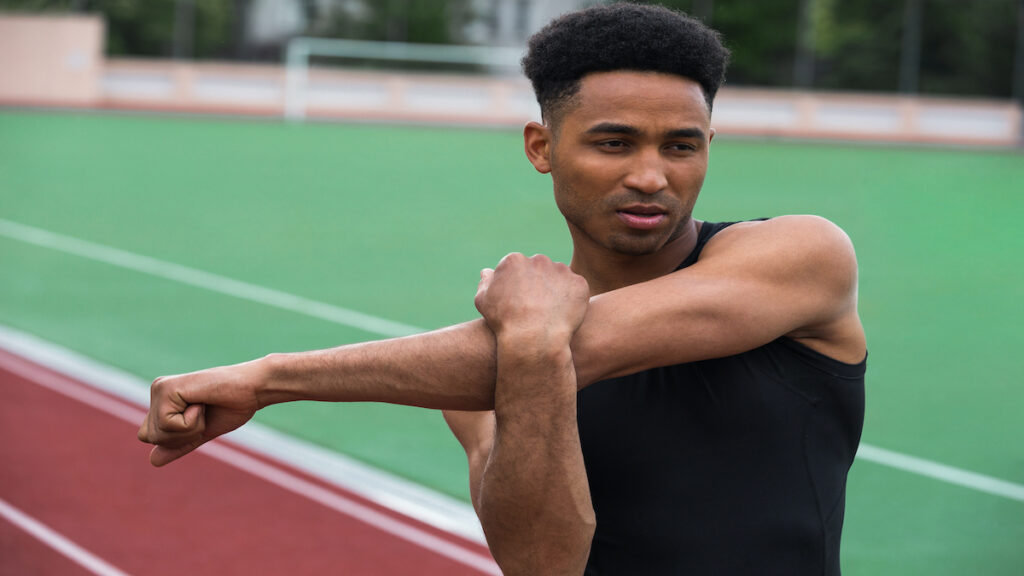
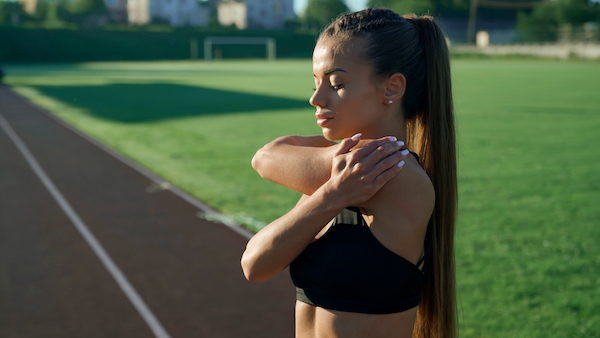
As the weather warms up and spring sports continue, many high school athletes and recreational fitness lovers head back outside for runs, workouts, track practice, and conditioning sessions in the gym. After a long winter (that sometimes includes less training and more time away from workouts), it is common to finish a hard workout feeling strong, only to wake up the next morning feeling very sore.
There are even those athletes who regularly work out and find themselves barely able to walk or raise their arms without that sweet, sore feeling. Sore legs, tight hamstrings, stiff calves, and heavy arms are all part of the spring sports season. Whether you are a runner, soccer player, lacrosse athlete, or sprinter, muscle soreness is something nearly every athlete experiences.
So what’s going on physically?
Understanding why your body feels sore after a spring workout can help athletes recover smarter, train better, and avoid injury.
What Causes Muscle Soreness?
The good news is that slight soreness is completely normal. It’s acutally part of the is part of the rebuilding process. Some athletes and gym goers actually embrace feeling that a little achy—and bonus if they also feel like muscle pump—as an indicator of a good workout.
Tenderness or soreness felt after an intense workout is known as delayed onset muscle soreness (DOMS).
DOMS can typically be felt 12 to 24 hours after exercise, and at its highest around 24 to 72 hours later. The achy, muscle fatigue, or stiff feeling that happens is caused by tiny tears in the muscle fibers and connective tissues from muscle lengthening and tension during exercise that result in inflammation and swelling. As the body repairs those fibers, the muscles grow back stronger.
The following are the main reasons why you are feeling sore after your workout.
Photo: Freepik
1. You Increased Your Training Too Quickly
Athletes can become sore after a spring workout, especially if it is a new workout routine. Increasing running mileage, lifting heavier weights, or coming back to exercise after a break, such as during the winter season, are all causes.
One of the biggest reasons to feel sore is doing too much, too fast. Maybe you went from winter break straight into grueling track practice or five-mile runs. The quicker a middle or high school athlete increases training ( mileage, speed, or lifting volume) the higher risk of feeling sore and tender.
This is especially common in early spring when athletes are excited to get outside again and may bite off more than they should chew.
Make sure to gradually progress in training. A little soreness can be expected, but it shouldn’t prevent you from taking the stairs the next day.
2. You’re Using Different Muscles
Spring training often engages different movements and exercises. Think more sprinting that uses fast-twitch fiber muscles for a 100-meter compared to a slower-paced cross country 5k pace. Soccer, pickleball, volleyball, and other sports require lateral movements and jumps.
Running hills outdoors, longer practices, and speed sessions all challenge muscles differently than treadmill runs or indoor lifting.
For runners, downhill running can especially cause soreness because it creates more eccentric muscle movement—when the muscle lengthens while working. This places extra stress on the quads, glutes, and calves.
3. You’re Not Recovering
Recovery matters just as much as training, and skipping recovery can delay muscle repair.
Athletes need proper nutrition, to prioritize hydration, and get enough sleep. It’s easy for busy students to ignore some or all of these factors. Make sure to cool down after a workout, stretch, and foam roll.
Remember that skipping recovery can turn normal soreness into fatigue and increase injury risk.
4. You’re Not Hydrating
This point is worth highlighting again and again—especially when the temperature becomes warmer during spring and summer. Athletes sweat more in the heat and humidity. It’s common not to realize how much fluid they are losing during their spring workout. That’s why dehydration can be dangerous. Even mild dehydration can make muscles feel tighter, heavier, and slower to recover.
Drinking water throughout the day—not just during practice—is one of the easiest ways to reduce soreness and improve recovery. Make it a habit to drink a glass of water first thing in the morning and end with a glass before bed.
5. You Didn’t Warm Up
Never jump right into a workout and especially a hard workout, without first properly warming up. The muscles need to be able to perform, and skipping a workout can leave muscles tight and more likely to feel sore later. Warming up prepares muscles for movement.
Dynamic stretching, light jogging, mobility work, and activation drills help athletes move better before workouts. Take 10 to 15 minutes to warm up properly, and save static stretching for after a workout.
When Soreness Is Normal—and When It Isn’t
Normal soreness feels like muscle tightness, heaviness, or tenderness that improves with movement. It gets better within a few days.
Muscle soreness should not be painful. Sharp pain, swelling, limping, joint pain, or soreness that gets worse instead of better may signal an injury, not normal DOMS.
Athletes should not ignore pain and should check in with a coach, athletic trainer, or doctor.