


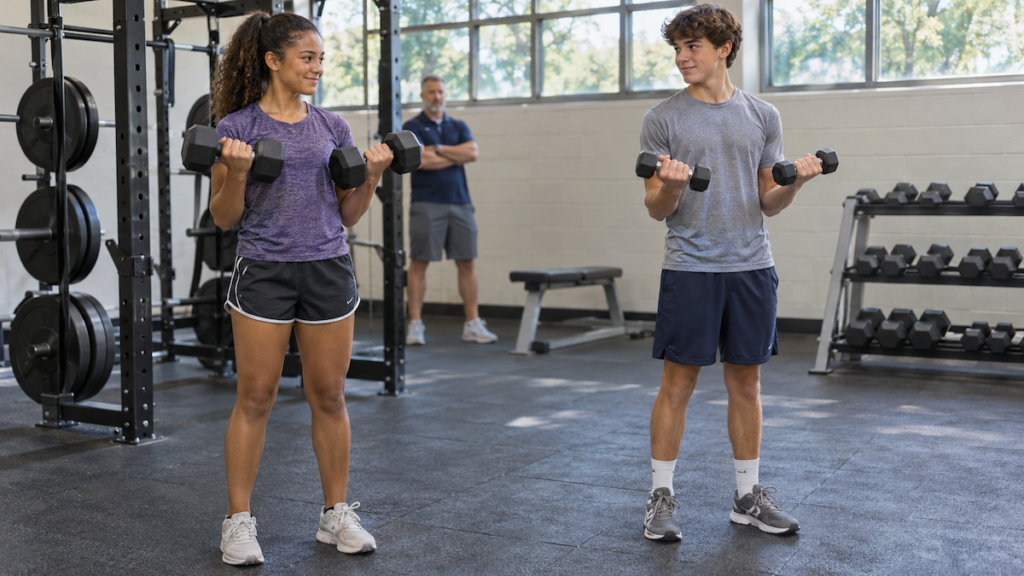
Training with a friend can help you stay motivated, but it can also create pressure. Here are tips for handling comparisons while working to get stronger and reduce your risk of injury.
Working out with teammates can make a world of difference when it comes to motivation. Having a workout partner can help keep you on track to reach your goals and stay consistent with training. But it can also have a negative effect mentally if you start feeling pressure to keep up. Physically, trying to maintain a faster pace during cross country practice or lifting heavier weights in the gym can increase your risk of injury if you take on a workload you are not ready for.
It’s understandable to want to keep up with teammates. You want to be on the same playing field when it comes to fitness and performance. Training with teammates can push you in a positive way, but things become complicated when keeping up changes your workout.
It’s important to avoid adding weight before you are ready or cutting your recovery short because your friend has already started the next set or interval. A light strength and conditioning session can quickly become another hard workout.
Your friend may have been lifting consistently for two years while you started this semester. They may be preparing for a different event or position. Their current numbers provide limited information about what belongs in your training plan.
Friends and teammates with different abilities can still be good training partners. It starts with understanding different fitness levels and goals, along with what each athlete needs from that day.
Before a session, compare the instructions your coach gave you. Know your assigned pace or effort, repetitions, resistance, and recovery. Then work out which parts you can share.
For runners, that might mean warming up together, joining different workout groups, and meeting again for the cooldown. It might mean letting your friend go ahead while you stay at your target pace. On an easy day, running side by side can work when the pace is comfortable for both athletes. If one person is struggling to hold a conversation, discuss the pace before the run turns into a chase. Avoid pushing the pace on easy run days just to stick with a specific pack of runners.
Pay attention to recovery, too. If your teammate finishes a lifting set before you and you both restart together, you may receive less rest. Check whether your coach wants a set recovery period after each effort or a shared start time. That detail can change how the session feels.
In the weight room, sharing a station can still mean using different weights. Take time to adjust the equipment between sets. Follow your own assigned repetitions and rest periods.
Always focus on proper form and technique, especially before progressing to heavier loads or more challenging exercises. Matching the weight your friend uses might be possible, but it can be ineffective and even dangerous if your technique breaks down.
A training partner can help record repetitions, keep track of rest, and offer encouragement. Spotting should follow the coach’s instructions and be done only when you have been taught how to do it.
It also helps to be direct about your plan. You can say that you are keeping today’s run easy, using the weight your coach assigned, or taking the full recovery between reps. You do not need to apologize for following the workout.
If you are the faster or stronger friend, give your teammate that same room. Ask what they are working on. Respect their pace and stop points. Save challenges for the competitive drills or sessions your coach has planned.
There is still plenty to learn from a teammate who is ahead of you. Notice how they prepare, how consistently they show up, and how they respond to coaching. Ask about the habits and tips that helped them improve.
Avoid getting caught up in comparisons, and remember that your teammate has also had skills to learn and challenges to work through. Even a fast, strong athlete will encounter someone who is ahead of them. Work on letting go of jealousy, pressure, or unrealistic expectations. Stay focused on your own development and track your progress. Let your teammates’ achievements motivate you as you work toward your own goals.